


Annual Report: Sudan in 2025: A Year of Shifting Balances, Stalled Peace, and Worsening Humanitarian Catastrophe
- Xinhua
- Dec 30, 2025
- 5 min read
KHARTOUM, Dec. 2025 (Xinhua) -- The year 2025 has become one of the most pivotal years in the history of the Sudanese conflict, witnessing profound shifts in the map of military control and intensive regional and international attempts to halt the war, against the backdrop of a persistent humanitarian crisis that remains described as the largest in the world.
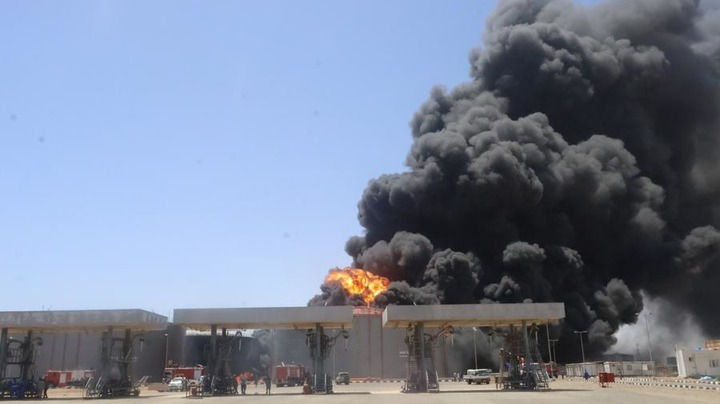
The events of the year can be analyzed through three main axes: the military field, peaceful settlement initiatives, and the humanitarian situation.
-- First: Shifts in the Map of Military Control The conflict in 2025 entered a new phase characterized by clearly defined spheres of influence, following two years of hit-and-run warfare. The first half of the year saw a qualitative advancement for the Sudanese Army. In January 2025, the army regained control of Wad Madani, the capital of Gezira State, a move considered a strategic shift that restored a vital economic and population center. By March, the army continued its advance by reclaiming the Presidential Palace, Khartoum Airport, and several sovereign government headquarters. This trajectory culminated in an official announcement in May 2025 declaring Khartoum State free of Rapid Support Forces (RSF) after more than two years of their control over most of the state.
Sudanese military expert Abdul Jalil Ismail told Xinhua: "The first half of the year represented the peak of the army's military performance since the war began, succeeding in restoring the state's symbolism. However, this was not enough to settle the conflict militarily due to the lack of a cohesive political cover." He warned that the absence of administrative arrangements allowed the RSF to reorganize and move the battle to new theaters, especially in the west.
The second half of the year witnessed a reversal of fortunes in favor of the RSF. Starting June 2025, the RSF began a wide advancement in the Kordofan and Darfur regions. On Oct. 26, they seized El Fasher, the capital of North Darfur, after a year-long siege. This was followed by the capture of the strategic city of Babanusa in West Kordofan on Dec. 2, and the announcement of control over the Heglig oil field in South Kordofan on Dec. 8.
The current map shows the Sudanese Army controlling 10 out of 18 states (East, North, and parts of Central Sudan), while the RSF controls 6 states (the five Darfur states and West Kordofan), with North and South Kordofan remaining contested. Conflict analyst Naji Ajib told Xinhua: "The end of 2025 has established a new geographical reality, threatening a long-term de facto division."
The year was also marked by an unprecedented escalation in drone warfare. In May, attacks reached Port Sudan, the army's temporary administrative capital, for the first time, while vital installations in Khartoum and other states were repeatedly targeted.
-- Second: Initiatives for a Peaceful Solution... Active Diplomacy and Deferred Results In tandem with the military escalation, regional and political efforts to contain the war intensified, though they failed to achieve a real breakthrough. The "International Quartet" on Sudan (United States, Saudi Arabia, UAE, and Egypt) emerged as the most prominent diplomatic framework during the year.
On Sept. 13, 2025, the four countries issued a joint statement following intensive ministerial consultations in Washington, followed by meetings in October attended by delegations from the Army and the RSF. A three-stage roadmap was proposed: a three-month humanitarian truce, a long-term ceasefire with regional and international guarantees, and a transitional process leading to an independent civilian government within nine months. Despite agreement on its terms, none of the roadmap's provisions have been implemented yet.
International relations expert Hussam El-Din El-Sadiq told Xinhua: "The Quartet succeeded in formulating a comprehensive framework for a solution, but failed to impose enforcement mechanisms, especially amid conflicting regional interests and a lack of trust between the Sudanese parties."
The scene was further complicated when the RSF and various political and military entities signed a charter in Nairobi on Feb. 22, 2025, to form a parallel government. In response, the Chairman of the Transitional Sovereign Council, General Abdel Fattah al-Burhan, issued a decree in May appointing Kamel Idris as Prime Minister, who began forming a 22-ministry government on July 3. On July 26, an RSF-led alliance announced a rival government headed by Mohamed Hassan al-Taishi, a move condemned by the official government.
Political analyst Abdel Rahim al-Suni told Xinhua: "The existence of two parallel governments deepens the division and transforms the conflict from a war for influence into a legitimacy crisis that threatens the state's unity."

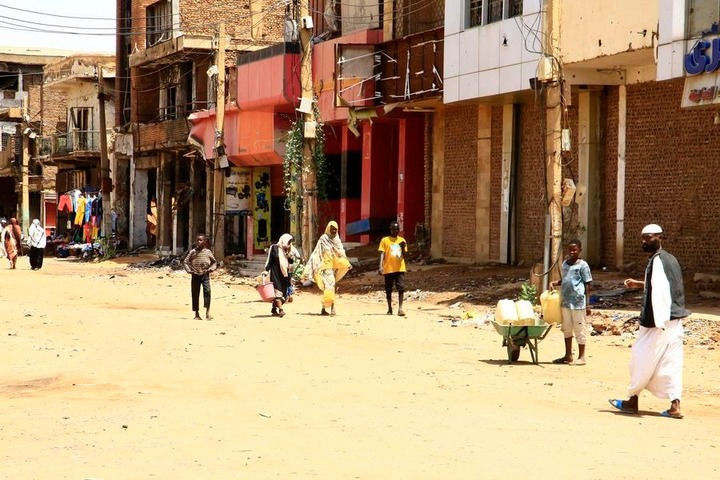
Third: Humanitarian Crisis... Sudan at the Forefront of Global Tragedies While the military and political fronts saw fluctuations, the humanitarian situation continued to oscillate between relative improvement in some areas and persistent deterioration in others, particularly in the Kordofan and Darfur regions.
The latest Integrated Food Security Phase Classification (IPC) analysis, issued on Nov. 5, 2025, indicated a slight improvement in acute food insecurity levels by September 2025. The number of affected people dropped to approximately 21.2 million (45% of the population), as 3.4 million people exited the "crisis" phase compared to the previous period. This relative improvement was linked to partial security stability since May 2025 in Khartoum, Gezira, and Sennar states, allowing for the gradual return of 2.45 million internally displaced persons (IDPs) and about 580,000 refugees from neighboring countries.
However, these gains remain fragile. While a good harvest season is expected to reduce the numbers to 19.3 million between October 2025 and January 2026, the report warned that hunger could worsen again starting February 2026. Conversely, Darfur and Kordofan witnessed a sharp decline, with famine conditions (Phase 5) confirmed in the besieged cities of El Fasher and Kadugli. The report also warned of famine risks in 20 additional areas across Darfur and Kordofan.
For the third consecutive year, Sudan topped the International Rescue Committee’s (IRC) Global Crisis Watchlist this month, with nearly 12 million people displaced amid a severe funding shortage. Humanitarian expert El-Samani Hamza told Xinhua: "What is happening in Sudan has surpassed traditional emergency limits; it is a total collapse of life's essentials." He added that the current response remains below the minimum requirement, warning of rising hunger and disease unless aid is linked to a permanent ceasefire.
In conclusion, 2025 was a year of entrenching realities rather than finding solutions. The map of military control shifted sharply, peace efforts intensified without tangible results, and the humanitarian tragedy persisted. As Sudan enters a new year, the question remains: will these shifts pave the way for a comprehensive settlement or mark the beginning of a longer phase of division and suffering?


Comments