


Constitutional Crisis in the US: Trump Orders National Guard to 4 States Without Coordination, Faces "Overreach" Accusations
- Next News
- Oct 6, 2025
- 2 min read

US President Donald Trump's decision to dispatch federal National Guard troops to four states—Texas, California, Oregon, and Illinois—has sparked a sharp wave of political and legal criticism. A federal judge described the move as a "direct override of court orders and a violation of the principle of state sovereignty."
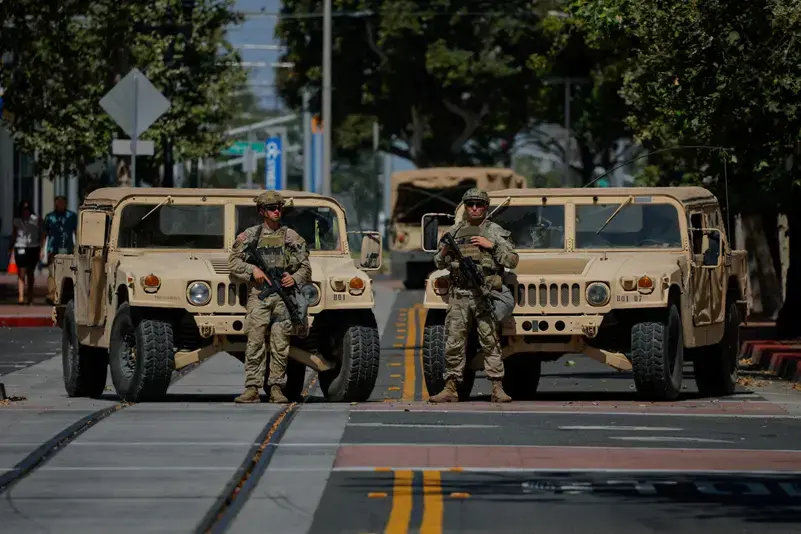
Judge Karin Immergut temporarily halted the administration's plan to deploy the National Guard in Oregon on Sunday evening, just one day after issuing a similar ruling against the deployment of Oregon's own Guard troops. She emphasized in her ruling that "there is no legal or factual justification for deploying federal military forces in a state that is not facing an insurgency or an exceptional security risk."
Deployment Motives and State Reactions
Trump’s order directed approximately 400 Texas National Guard personnel to Oregon and Illinois, and possibly to "other locations later," according to an official Pentagon memo. This decision came days after "limited" nightly protests outside the Immigration and Customs Enforcement building in Portland, Oregon, raising questions about the motive for such a wide military deployment. Additionally, 200 federal National Guard personnel from California—originally on a mission around Los Angeles—were redeployed to Portland "to protect federal property."
Governors of the affected states confirmed they received no official notice or prior coordination regarding the move, calling it an attempt to "circumvent judicial decisions."
Oregon Governor Tina Kotek: Called the situation "unjustified escalation," asserting: "There is no insurgency in Portland, no national security risk, and no justification for any military intervention."
California Governor Gavin Newsom: Described the decision as a "blatant violation of law and authority," accusing the President of "using the American military as a political weapon against citizens."
Illinois Governor J.B. Pritzker: Condemned the uncoordinated order and called on Texas Governor Greg Abbott to withdraw support for the operation.
Constitutional Debate and Military Politicization
The National Guard is typically called upon by the local Governor for disasters or public order maintenance. Converting it into a "federal force" under the President's command is a rare exception requiring coordination or a declaration of a widespread national emergency. Trump's unilateral decision, without state consent, represents a breach of the constitutional principle of federalism and an overreach of the Commander-in-Chief's powers, according to legal experts.
Analysts view the move as part of Trump's "iron fist" policy, particularly in Democrat-leaning cities like Portland and Chicago. Critics, like California Attorney General Rob Bonta, argue the President is "trying to leverage military authority to undermine democratically elected state authority," viewing the courts as the "last line of defense for the Constitution."
Although Judge Immergut was appointed by Trump, her ruling opens the door to an open constitutional confrontation between the federal administration and the states regarding the limits of the President's power to use the National Guard domestically, especially as political tensions rise near the legislative elections.


Comments