


Escalating Tensions Over GERD: Ethiopia Rejects Egyptian Accusations of Causing Sudan Floods
- Next News
- Oct 5, 2025
- 2 min read

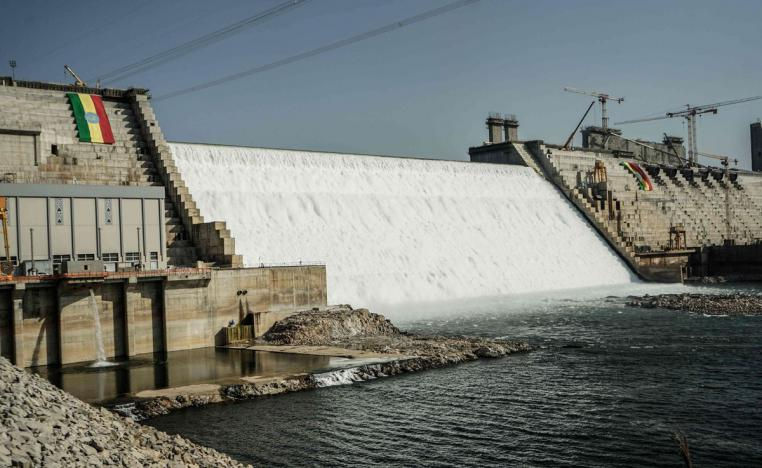
Tensions between Ethiopia and Egypt have escalated after Addis Ababa swiftly criticized and rejected Egyptian statements on Saturday that accused Ethiopia of causing floods in Sudan. These Egyptian accusations followed the recent opening of the gates of the massive Grand Ethiopian Renaissance Dam (GERD), inaugurated in early September as Africa's largest hydroelectric power generation facility.
Egyptian Accusations of Recklessness and Irresponsibility
On Friday, the Egyptian Ministry of Water Resources and Irrigation issued a strongly worded statement affirming that it had followed "the developments of this year's Nile River flood and the associated unilateral and reckless actions by Ethiopia in managing its dam (GERD), which it considers illegitimate and in violation of international law."
The Egyptian Ministry stated that "these actions have harmed Sudan... and lack the simplest standards of responsibility and transparency, representing a direct threat to the lives and security of the downstream countries' populations." This development comes as several regions in Sudan, including the capital Khartoum, have been experiencing floods for weeks, which Sudanese authorities attribute to natural factors like climate change and exceptionally heavy rainfall, in addition to the opening of dam gates.
Sharp Ethiopian Rebuttal and Clarification on Flood Source
In response, the Ethiopian Ministry of Water issued a statement on Saturday describing the Egyptian authorities' statements as "harmful, false, and aimed at deceiving the international community."
Addis Ababa clarified that the root cause of the floods in Sudan "is fundamentally the increased volume of the White Nile waters, which is a tributary of the Nile River and has no connection with Ethiopia." The GERD is located on the Blue Nile, which originates in Ethiopia and flows to Sudan, where it meets the White Nile to form the main Nile River. The Blue Nile provides up to 85% of the Nile River's water.
In an attempt to turn the tables, Ethiopia asserted that the GERD would have functioned as a protective mechanism, preventing "historical destruction of human lives and infrastructure" in Sudan and Egypt in recent months, especially following the "heavy rains on the Ethiopian highlands" this year.


Comments