


Feature: Coffeehouses: A Daily Ritual and Open Spaces for Jordanians
- Xinhua
- Dec 30, 2025
- 4 min read
AMMAN, Dec, 2025 (Xinhua) -- Coffeehouses have become integrated into every detail of Jordanians' lives. Visiting them is no longer limited to a specific segment of society, as was the case for many decades; instead, they have moved into the heart of the daily life of the Kingdom's citizens.

Today, coffeehouses in Jordan have transformed into hubs for youth and families to follow global sports championships, particularly major leagues and national football team matches, especially for expatriate communities in the Kingdom. Just as cafes in Amman were packed during the recent Arab Cup in Qatar, Jordanian and expatriate fans have returned to coffeehouses to watch the ongoing Africa Cup of Nations in Morocco, particularly matches featuring Arab teams.
Thus, coffeehouses are no longer just for spending a short time; they have become an integral part of the community’s culture and the distinct character of the Kingdom's cities. They have turned into open spaces for students, employees, business owners, and women, as well as those seeking a comfortable place to work.
According to statistical data obtained by Xinhua from the Jordanian Ministry of Industry, Trade, and Supply, there are currently 4,271 establishments licensed to operate as coffeehouses in the Kingdom. Jordanians are deeply connected to coffee culture, consuming 20,000 tons of coffee annually according to Jordan Chamber of Commerce statistics.
Coffeehouses: A Vital Part of Daily Life
Saif Abdul Monem, owner of one of Jordan's oldest traditional cafes, told Xinhua: "Central Cafe in downtown Amman, established in 1930, represents an authentic part of the city's history and social memory." Abdul Monem, a third-generation manager, added that cafes are a key part of the Jordanian lifestyle, especially those in the city center.
He noted that while many prefer old cafes for their heritage and atmosphere, the rise of modern-style cafes has negatively impacted traditional ones. He emphasized that the cafe remains a permanent meeting point for drinking coffee and tea, smoking shisha, playing cards, and watching matches—details that have solidified the coffeehouse as a space for social connection.
Breaking Free from Traditional Office Constraints
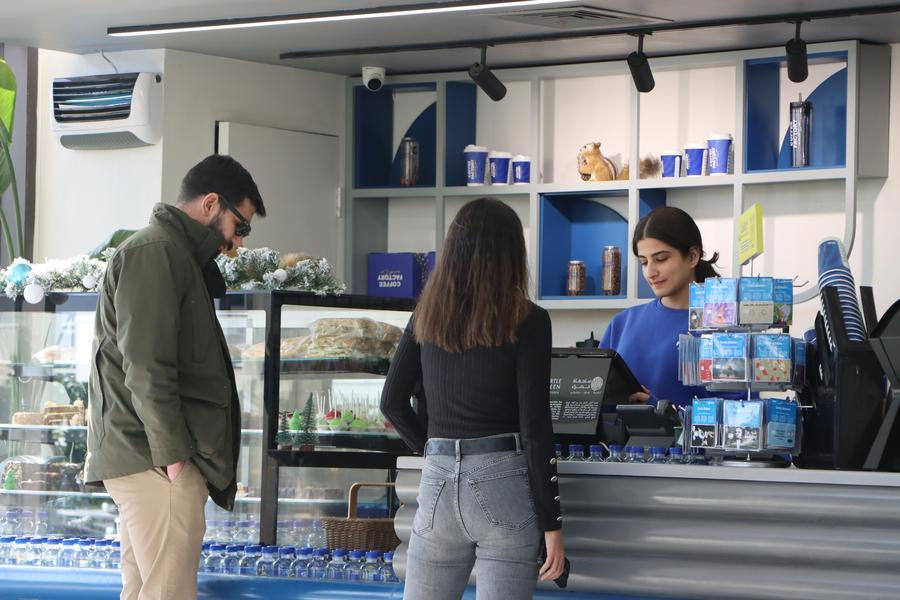
Reham Hussein, a private sector employee, often prefers working from a cafe rather than the office routine, especially since her work is flexible. "I often choose the cafe to escape traditional office constraints, which gives me more space to achieve and execute tasks," she told Xinhua, noting that many cafes in Jordan now cater specifically to this by providing desks and high-speed internet.
For Salah Abu al-Ghanam, cafes have become a social ritual for friends to gather, especially to watch matches. "Cafes are no longer just places for entertainment; they are spaces for meeting, chatting, playing cards, and enjoying shisha," he said, emphasizing that the friendly atmosphere and "warmth of the seating" are what people truly seek to relieve daily stress.
-- A Suitable Environment for University Assignments University
student Rama Mohammed finds cafes a comfortable and quiet space where she spends a significant part of her week. She told Xinhua that she meets her classmates there to solve assignments or study for exams, adding: "Sitting around one table creates an atmosphere of cooperation and support." At other times, she prefers going alone to drink coffee and read a book in silence, stating that the interior design and lighting help her focus.
Similarly, Ahmed Saif, who works in the private sector, considers visiting cafes a social and psychological necessity after long working hours. "The rapid pace of work makes it hard to visit friends at home, but staying out at a cafe breaks the work routine and provides a chance for mental decompression," he told Xinhua, noting that the surge of cafes in Jordan reflects a shift in social lifestyle and their growing role as a primary outlet for youth.
Coffeehouses as Gathering Hubs for People and Events
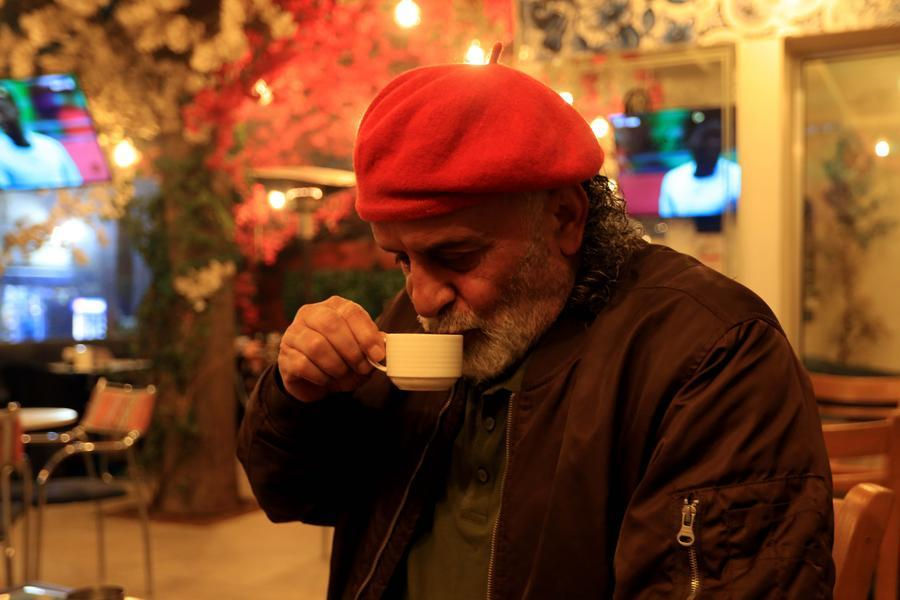
Anas Abu Odeh, an investor in the sector, told Xinhua that the global trend toward modern "coffee houses" is strongly present in Jordan, competing with traditional cafes in service quality, atmosphere, and design. He noted that this widespread presence has created positive competition to provide advanced digital services and entertainment, attracting increasing numbers of citizens. Abu Odeh explained that cafes are now a lifestyle choice, serving as venues for social events, remote work, business meetings, and cultural activities.
Sociologist Dr. Hussein Al-Khuzaie views frequenting cafes as a sophisticated social behavior reflecting a shift toward seeking relaxation outside the home. He told Xinhua: "The coffeehouse has become a means of social communication, dialogue, and a cultural meeting point, especially for students." He emphasized that cafes help youth spend their free time in positive social activities, providing safe and comfortable spaces for interaction.
A Practical Alternative to Home Gatherings
Jamal Al-Rifai, Vice President of the Jordan Chamber of Commerce, confirmed that cafes have become an integral part of daily life and a practical alternative to home gatherings. He told Xinhua: "In recent years, the spread of cafes across Jordanian cities has been so extensive that they have become a permanent feature of the country's urban landscape." He added that the Jordanian coffeehouse is now an extension of both home and work—a space for rest, exchanging views, and hosting informal meetings.


Comments