


The China Security Summit: Is a New Alliance Against U.S. Influence on the Rise?
- Next News
- Sep 1, 2025
- 4 min read

Russian President Vladimir Putin is visiting China for the second time, but this visit is different. For the first time since the invasion of Ukraine, Putin is visiting his key ally not as a subordinate, hemmed in by Western sanctions, but as a global leader on equal footing with U.S. President Donald Trump, the world's foremost economic and military power and China’s main rival.
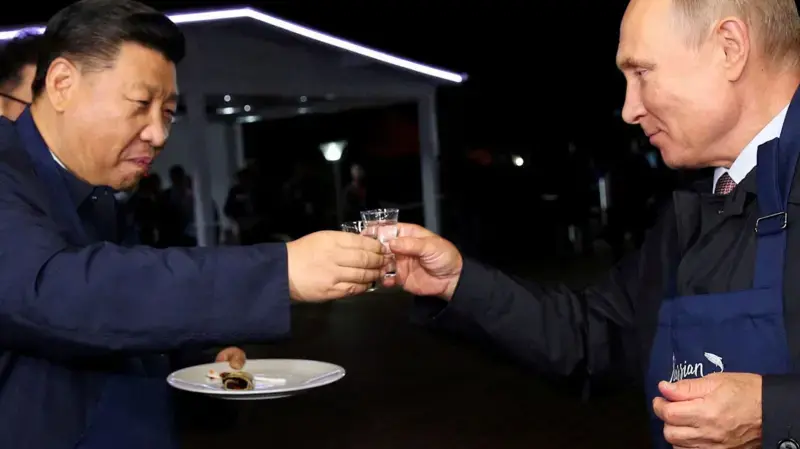
This trip to China is a diplomatic victory for Putin, who recently returned from Alaska after a formal welcome by Trump on U.S. soil. During that meeting, Putin successfully persuaded Trump to abandon his demands for no strikes on Ukraine, as well as his threats of new sanctions on Russia.
In China, Putin will be greeted with great fanfare as he joins more than 12 regional leaders in Tianjin for a two-day Shanghai Cooperation Organisation summit. The meeting will also include North Korean leader Kim Jong Un, known for his hostile anti-Western rhetoric, and Indian Prime Minister Narendra Modi, whose relationship with both Beijing and Washington is complex. A large number of leaders are expected to attend a formal parade in Beijing on Wednesday to commemorate the 80th anniversary of the end of World War II and celebrate the "victory of the Chinese people in the war of resistance against Japanese aggression, and the victory in the global anti-fascist war."
The occasion raises questions about whether these events in China this week signal the strengthening of a global alliance against the U.S. and if the Russia-India-China (RIC) bloc—a powerful alliance that has been dormant for the past five years—is becoming active again amid rising trade wars with President Trump.
Trump Fails to Drive a Wedge Between Putin and Xi Jinping
Experts suggest that Putin's unusual visit to China is intended to demonstrate the "unlimited friendship" between Russia and China and show that U.S. attempts to sow discord between them will fail. They argue that even if Trump were to cede Ukraine to Putin and lift sanctions, Russia would not turn away from China.
Experts point to how then-Secretary of State Henry Kissinger managed to pull China away from Soviet influence in the 1970s under President Richard Nixon. However, relations between Beijing and Moscow were already strained then, which is not the case today.
Pierre Andreau, a Chinese-Russian relations expert at the Asia Society Policy Institute, says that "the increased trade pressure on China by the Trump administration strengthens the Russian-Chinese axis. Attempts to weaken the ties between the two countries and carry out a so-called 'reverse Kissinger' have not yielded any tangible results."
An anonymous expert on Russian-Chinese relations, writing for the Center for European Policy Analysis, stated, "If the U.S. strategy is to stir up discord between Moscow and Beijing by ending the war in Ukraine and lifting some sanctions on Russia, then Washington is inaccurately assessing the depth and complexity of this partnership." China has become the primary buyer of Russian energy and the main supplier of cars and other goods to Russia after Western companies suspended their operations there. The war in Ukraine has also strengthened the ideological bonds between Russia and China.
India: A Complex Component in the Potential Alliance
India, the third member of the RIC bloc, is a complicated factor due to its intertwined relations with both Beijing and Washington, which could hinder any attempt to revive the bloc. The meeting between Xi Jinping and Modi on the sidelines of the Shanghai Cooperation Organisation summit is highly significant as it marks Modi’s first visit to China in seven years. The two countries have barely spoken since the border clashes in the Galwan Valley in 2020.
However, India's deteriorating economic situation has changed the dynamic. President Trump's high tariffs on Indian goods, intended to punish New Delhi for its continued purchase of Russian oil, seem to be pushing the former rivals closer. Xi Jinping told Modi that China and India should be partners, not adversaries, and Modi affirmed that there is now an "atmosphere of peace and stability" between the two countries.
Modi confirmed that flights between India and China, which had been suspended for five years, will resume, though no specific timeline was given. Xi Jinping stated, "Both sides should handle and address their relationship from a long-term strategic perspective," emphasizing that "the two sides being friends is the right choice for both."
What This Means for the Future of Alliances
Experts believe that a revival of a major and effective tripartite alliance, which both Russia and China have expressed a desire for, would challenge Washington's growing influence. However, India must maintain a very delicate political balance, regardless of the economic reality created by Trump's tariffs. It also needs to find solutions to deep-seated trust issues with China.
Experts point out that India is keen to maintain an independent foreign policy, while the memory of deadly border clashes with China remains fresh. India is also concerned about China’s close relationship with Pakistan, its long-standing adversary. Furthermore, decades of careful diplomacy that brought India closer to the U.S. would need to be re-evaluated and potentially abandoned, which would be a high price to pay if the country decides to fully join an anti-Washington alliance.
However, the overall scene this week is hard to ignore. Putin and Kim Jong Un are expected to attend the military parade in Beijing, alongside Iranian President Masoud Pezeshkian and 23 other heads of state. This carefully planned event will feature tens of thousands of soldiers marching through historic Tiananmen Square.
Neil Thomas, an expert on Chinese affairs, questions whether this meeting represents "the first summit of an axis of autocracies." He believes such a union is unlikely to last long due to the members' differing goals and mutual distrust. Thomas suggests that the attendance of Putin, Pezeshkian, and Kim Jong Un highlights China's role as the world's leading autocratic power. Therefore, the events of this week in China may be a powerful display not necessarily of the effectiveness of alliances like the Shanghai Cooperation Organisation, the RIC, and BRICS against Washington, but rather of China's centrality in any of these future alliances.


Comments