


Why China… Why Now?
- Fady Philip

- Sep 14, 2025
- 2 min read
The international scene is no longer what it was a decade or two ago. The power the world once considered the “guarantor” of Arab security is no longer as committed nor as serious. The recent Israeli attack on Qatar, taking place just a few miles away from the largest U.S. military base in the region, was a shock to many Arab capitals. The message was clear: America’s presence does not necessarily mean protection.

The United States, which for decades raised the banner of “strategic alliances,” is today experiencing political withdrawal and domestic turmoil. The current president, Donald Trump, has returned to the White House with a program more hardline than his first term, supported by the MAGA movement, which represents the strongest nationalist right-wing current in modern American history. This return has not brought reassurance to allies; on the contrary, it has confirmed that Washington now views the world solely through the lens of narrow self-interest, even at the expense of its historical commitments.
Trump’s current policies clearly reveal that the United States is no longer the partner that can be relied upon for the long term. He does not hide his isolationist tendencies, nor his readiness to abandon allies if their interests do not align with his vision. With the rise of the right wing and the deepening divisions within the U.S., Washington appears less willing to bear the burden of global leadership it has long assumed.
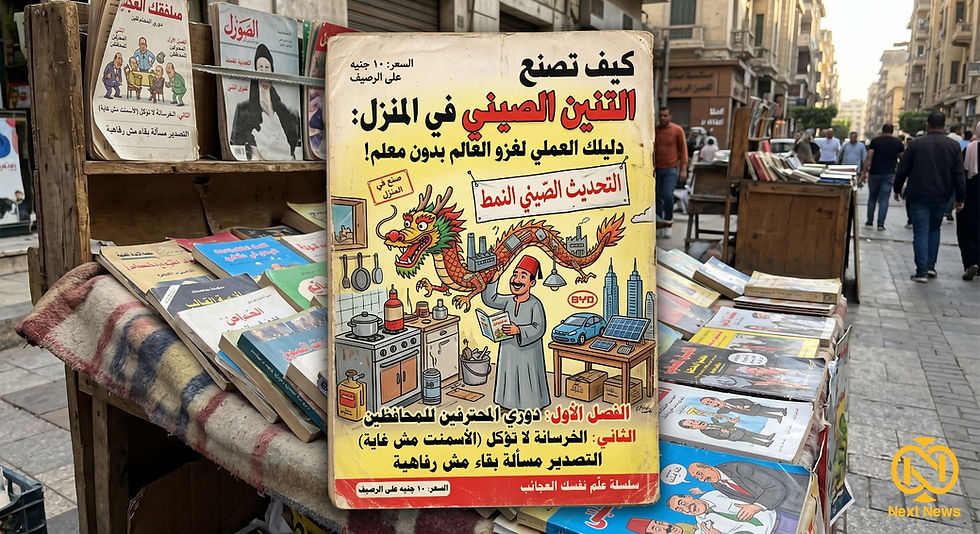
In contrast, China presents itself as a rising alternative, not through military power or tutelage, but through a completely different model: the “Chinese modernization path.” The essence of this model lies in cooperation without interference, in investment, infrastructure, and economic partnerships free from political conditions and dictates.
Today, China is the leading trade partner for most Arab states, offering through the Belt and Road Initiative a strategic opportunity to transform the region into a hub within the new global trade network. From ports to railways, from energy to technology, Beijing represents a partner seeking mutual benefit rather than domination.
The question “Why China?” no longer requires extensive justification. China is the world’s second-largest economy, advanced in artificial intelligence, clean energy, and communications, and capable of offering practical alternatives that reduce excessive reliance on the West.
But the more pressing question is: “And why now?”
The answer lies in the critical timing of today’s international order. America is retreating politically and morally, sinking deeper into its internal conflicts, and becoming more inward-looking under the leadership of a hardline nationalist current. Europe is preoccupied with its crises, Israel is becoming increasingly aggressive, while China is actively seeking strategic partnerships in the Middle East. The present moment represents a rare window for Arabs to establish a new balance, based on a relationship with a global power that does not seek to impose an internal agenda on them, but rather to expand shared interests.
Today, Arabs face a historic choice: remain bound to an alliance whose foundations have been shaken, or open up to a rising power offering a different model. The question is no longer: “Should we turn to China?” but rather: “When, and how fast?” The answer cannot be postponed: Now.


Comments