


How to Build a "Chinese Dragon" at Home: Your Practical Guide to World Domination!
- Fady Philip

- Apr 20
- 2 min read
(First Edition – Beware of Imitations)
Some believe the "Chinese Miracle" is a secret recipe consisting of a billion people waking up at 6 AM, eating noodles, and suddenly deciding to build a factory. In reality, the "Chinese-style modernization" is neither magic nor superhuman genetics; it is a rigorous, relentless operating "catalogue." If you read and applied it, your village might just become a superpower. Here are the chapters of this catalogue, backed by facts and figures.
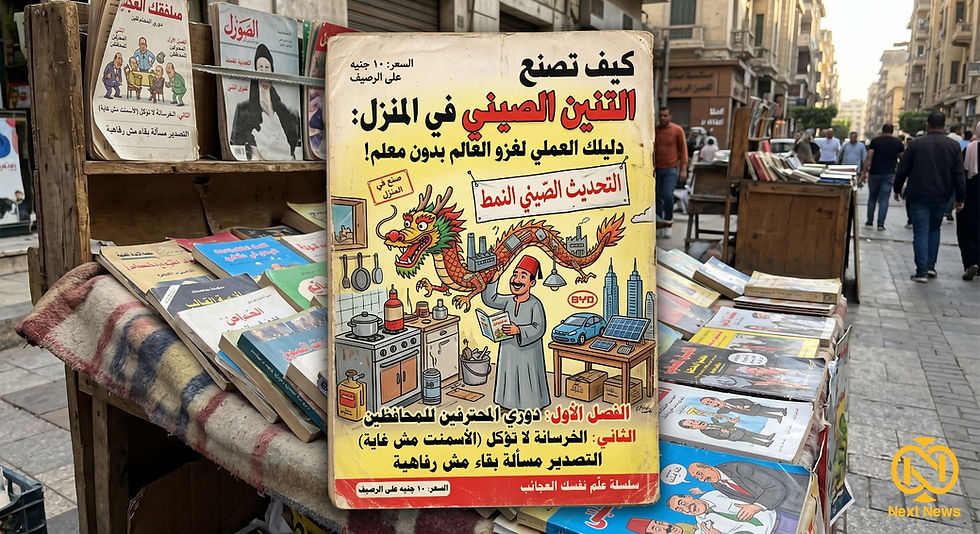
Chapter 1: "The Provincial Champions League" (Competitive Decentralization) The central government in Beijing doesn’t micro-manage every biscuit factory. The system is more like a fierce "football league" between provincial governors. Promotion isn't based on speeches, but on brutal Key Performance Indicators (KPIs).
The Model: Beijing makes local governments responsible for 85% of public spending but only gives them 50% of tax revenue. This "programmed deficit" forces governors to act as "sales reps" in suits, fighting to lure investments. Take the city of Hefei; in 2020, they acted as a Venture Capital firm, pumping $1 billion into the EV maker NIO to save it from bankruptcy. Today, Hefei is an EV global capital.
Chapter 2: The Concrete Trap (You Can't Eat Cement) The Chinese model realized early that infrastructure is a "means," not an "end."
The Ghost Lesson: In the height of the real estate craze, "Ghost Cities" like Kangbashi appeared—luxury skyscrapers with no residents.
The Pivot: When real estate hit 25% of the GDP, the government stopped the bleeding. They shifted incentives toward the "New Three": EVs, lithium batteries, and solar energy. The rule: A building is sold once, but a production line creates wealth every day.
Chapter 3: "Shanzhai" (Copy the Smart Kid, Then Outsmart Him)
The Strategy: Start by imitating everything, from knock-off iPhones to fake luxury brands. But the secret isn't staying a "cheap copycat"; it's using those profits to fund R&D.
The Example: Tencent began with a literal clone of ICQ. Today, they own WeChat, an app the Chinese people can’t breathe without, and Western companies are now the ones trying to copy its features.
Chapter 4: Exporting is Not an "Option"—It’s a Military Doctrine You don’t manufacture just to satisfy the local market; you manufacture to suffocate your competitors globally.
The Reality: In 2023, China exported 5.2 million vehicles, dethroning Japan.
The Case of BYD: Backed by nearly $29 billion in state support between 2009 and 2022, BYD is now an "economic tsunami" forcing Western giants to beg for protective tariffs.


Comments